

Mastering RevShare: A practical guide for online casino operators

Updated 25 Feb 2026•Published 25 Feb 2026
Overview
Affiliate marketing is the lifeblood of many iGaming brands and a proven way to acquire new players cost-effectively. One of the most common commission structures used by online casinos is the Revenue Share (RevShare) model.
In this article, we’ll break down exactly how the RevShare model works, when it makes sense to use it, when it doesn’t, and how both operators and affiliates can get the most out of their long-term partnership.
The RevShare affiliate model explained
The RevShare model works like this: the affiliate earns a percentage of the money the casino makes from the players they refer. The amount is calculated after costs such as bonuses and administrative fees are deducted.
For example, if an affiliate sends a player to your online casino and that player deposits money and loses $500 (after any bonus payouts or fees are deducted), you would pay the affiliate a percentage of that $500. This is typically anywhere between 25% and 50%, depending on your agreement.
Using the RevShare model means your affiliate costs will rise and fall in line with how much referred players spend and lose at your casino. This creates a shared incentive for both parties to attract loyal, high-value players.
Key points:
- Typical share:
Affiliates usually earn between 20% and 50% of net revenue. - Duration:
Some RevShare deals pay affiliates for the lifetime of the player, while others limit earnings to a fixed period, such as 12 or 24 months. - Payment frequency:
Payments are typically made monthly, but most deals include a minimum payment threshold. If an affiliate’s earnings don’t reach this amount, they roll over to the next month. - Comparison to CPA:
Unlike CPA (Cost Per Acquisition) deals, where you pay a fixed fee for each new depositing player, RevShare requires recurring, performance-based payouts for as long as players remain active.
Operator tip:
Always read the fine print to check whether the agreement includes negative carryover, meaning losses in one month roll over to the next.
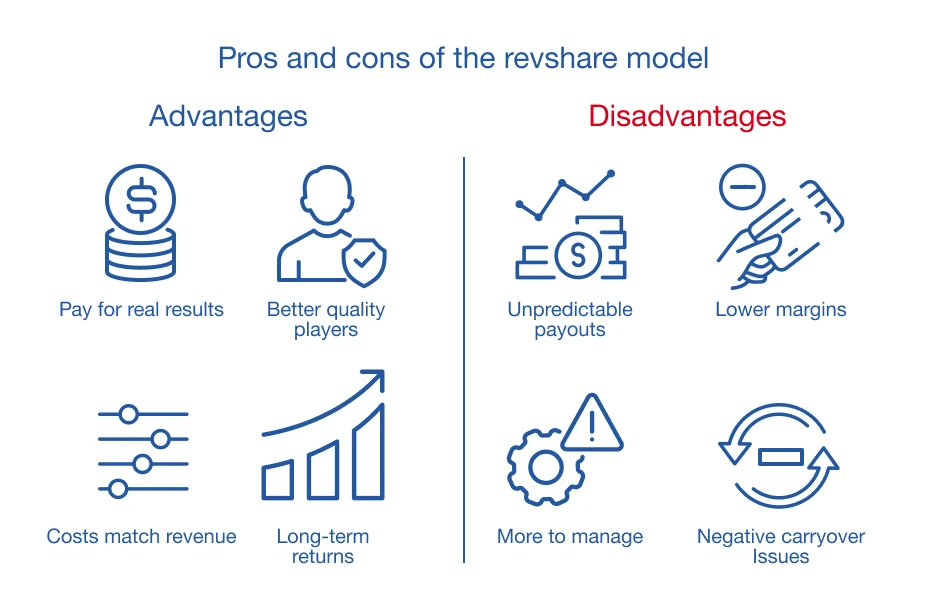
Pros and cons of the RevShare model
Before you choose a RevShare deal as your affiliate program of choice, it’s worth reviewing the main upsides and downsides. RevShare can be an effective way to grow your player base while keeping costs tied to real performance, but it also brings risks if not managed properly.
Advantages: Why RevShare works
- Pay for real results:
With RevShare, you only pay affiliates when their players spend money and generate profit. This helps you avoid spending on traffic that doesn’t convert. - Better quality players:
Because affiliates earn more the longer their players keep playing, they’re motivated to send you loyal, high-value customers. This can result in higher lifetime value (LTV) and more stable revenue. - Costs match your revenue: Your affiliate costs rise and fall with your revenue. If overall player spend drops in a given month, so do your payouts to affiliates. This makes it easier to manage marketing spend during slower periods.
- Bigger returns over time:
In markets where players stay engaged and continue to deposit, RevShare can deliver stronger long-term returns, especially compared to paying a large one-time CPA fee up front.
Disadvantages: The risks to watch for
- Unpredictable payouts:
RevShare payments can fluctuate from month to month. If your traffic suddenly increases, your costs can rise as well. You need to account for this in your budgeting and planning. - Smaller profit margin:
Over time, paying a share of your revenue means you keep less of each player’s spend. If an affiliate’s players don’t remain active for long, this can end up costing you more than a CPA deal. - More to manage:
Running RevShare deals requires reliable tracking, clear reporting, and transparent communication. Errors or unclear terms can lead to disputes and damage your casino’s reputation. - Negative carryover issues:
Some deals include a negative carryover clause, where an affiliate’s losses roll into the next month. This can reduce what you pay, but many affiliates dislike it and may refuse to work with brands that use it.
Key takeaway:
In general, RevShare works best for casinos with strong player retention and established trust with affiliate partners.
While this model can help you build long-term partnerships and keep acquisition costs aligned with revenue, it requires very clear rules, fair terms, and regular reviews to run smoothly.
When to use the RevShare model
The RevShare model works best when it aligns with the affiliate’s traffic profile and supports your long-term goals as an operator. It’s about building sustainable revenue and strong affiliate relationships that deliver over time, rather than chasing short-term wins.
Here are the ideal scenarios where choosing the RevShare approach makes sense:
- Seeking quality over quantity:
Affiliates with loyal, returning audiences, such as established blogs, trusted review sites, or active forums, are more likely to send players who deposit regularly and remain active longer. This means you generate more value from each player over time, which is where RevShare performs best. - Mature markets:
RevShare is especially effective in stable, regulated online casino markets where player lifetime value (LTV) is more predictable and churn rates are lower. When players tend to stay engaged and continue depositing, revenue sharing makes financial sense for both you and your affiliate partners. - Long-term partnerships:
If you want affiliates who care about your brand’s success and are invested in it, RevShare is a strong fit. Because their earnings depend on how long their players remain active, both sides share an incentive to prioritize quality traffic and fair treatment. - Reliable tracking:
RevShare works best when tracking and payments are clear and accurate. Affiliates need to trust that their earnings are tracked correctly and paid on time. This is why casino operators with strong reporting and a reputation for transparency are more likely to attract serious affiliates.
Key takeaway:
If you know your traffic converts consistently, a well-managed RevShare deal can often outperform one-time CPA payouts over the long term.
When to avoid the RevShare model
While RevShare can be highly rewarding, it isn’t always the right choice for every online casino operator. In some cases, other commission models such as CPA (Cost Per Acquisition) or hybrid deals work better, especially if you want faster results or more predictable costs.
Here are the scenarios where you may want to avoid using a RevShare model:
- Unpredictable traffic:
If your affiliates primarily deliver low-quality or one-off traffic, such as paid ads with little brand loyalty or one-time bonus hunters, RevShare may not be a worthwhile investment. These players often deposit once and churn quickly, resulting in lower overall returns than a flat CPA deal. - Emerging or unstable markets:
In newer or less stable markets, player LTV can be difficult to predict. If churn is high and retention is low, RevShare may not deliver the steady income you expect. You could end up paying affiliates for traffic that does not convert over the long term. - Short-term campaigns:
If your main goal is to drive sign-ups during a product launch or seasonal promotion, a CPA model can deliver faster results. It also makes budgeting easier, since RevShare works best over months or years, not short-term bursts of activity. - Weak reporting systems:
RevShare can quickly lead to disputes and mistrust if you don’t have strong tracking and reporting tools in place. Affiliates need access to clear, near real-time data to feel confident they are being paid fairly and to avoid damaging relationships.
Key takeaway:
If you need fast traffic or your audience is unlikely to stay engaged and deposit again, it’s usually smarter to choose CPA or hybrid deals instead of pure RevShare.
Final thoughts: Getting RevShare right
The RevShare model remains one of the most popular ways for online casinos and affiliates to build profitable, long-term partnerships. When implemented well, it rewards both sides for attracting quality players who keep returning, creating a mutually beneficial relationship based on trust and shared success.
However, RevShare is not a one-size-fits-all solution. As an operator, the key is to understand your traffic, your market, and ensure your tracking and reporting are reliable. Affiliates tend to choose brands that communicate clearly, pay on time, and provide trustworthy data.
With these foundations in place, a well-managed RevShare deal can deliver stronger returns than a simple CPA payout. This puts you on a solid path toward turning short-term clicks into long-term revenue growth.
Popular blog posts