Africa’s online casino landscape: Legal status, licensing, and growth potential
Updated 7 Jan 2026•Published 7 Jan 2026
Overview
Africa’s vast online casino market is evolving rapidly, offering operators both exciting opportunities and unique challenges. As mobile technology improves and internet access expands, growth across the continent is accelerating, but navigating Africa’s complex and varied legal systems is essential for successful market entry.
This guide provides an overview of the legal status of online casinos across African countries, highlighting leading markets and emerging opportunities.
DISCLAIMER
This information is not intended to be legal advice and is solely extracted from open sources. It should not be relied upon as a substitute for professional legal advice, and Agreegain does not accept any liability for its use.
An overview of online casino gambling in Africa
Africa’s online casino industry is seeing substantial growth, fueled by rising smartphone adoption, expanding mobile payment options, and a young population that’s highly engaged in digital entertainment.
The regulatory environment varies widely across the continent. Countries like Kenya, Nigeria, and Ghana have established regulatory systems and already host active online casino operations. Other nations are still in the process of developing or updating their gambling laws, while some maintain unclear legal positions — and a few enforce outright bans.
Understanding the current state of online casino gambling across Africa is essential for any operator planning regional expansion. While the potential is enormous, legal and regulatory frameworks differ significantly from one country to the next, making it crucial to understand the broader landscape before targeting specific jurisdictions.
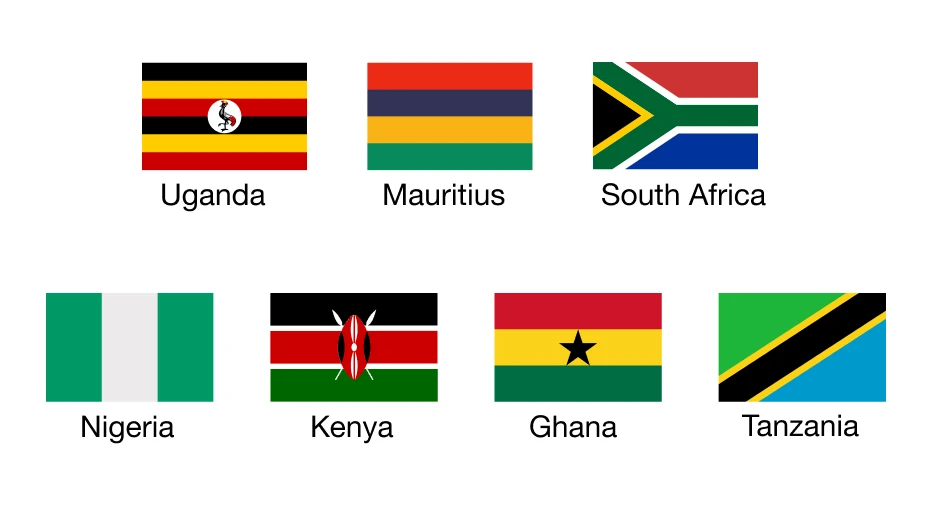
Key African online casino markets
Africa encompasses a diverse range of regulated online casino markets. Each country has its own legal framework, compliance standards, and growth trajectory.
This section explores the leading African jurisdictions where online casino gambling is both legal and commercially viable. These markets may serve as potential entry points for international operators seeking compliant and sustainable expansion into new regions.
Online casinos in Nigeria
With Africa’s largest population — over 200 million — and rapidly growing smartphone usage, Nigeria presents significant long-term potential for online casinos. A youthful demographic, expanding digital infrastructure, and increasing familiarity with mobile payment platforms all support the rise of real-money online gaming.
Online casino gaming in Nigeria is regulated at the state level following a 2024 Supreme Court ruling that struck down the federal National Lottery Act of 2005 as the foundation for licensing gambling operations.
In response, the Federation of State Gaming Regulators of Nigeria (FSGRN) introduced the Universal Reciprocity Certificate (URC) in May 2025. This framework allows operators to apply once for approval across multiple states under a unified licensing system.
However, the online casino sector remains less developed than sports betting, partly due to stronger cultural and religious sensitivities toward games of chance.
Operators entering this market must navigate Nigeria’s evolving legal framework and relatively high operating costs while establishing trust in a landscape still cautious of unlicensed platforms.
Online casinos in Kenya
With high mobile penetration, widespread internet connectivity, and a young, tech-savvy population, Kenya has become one of Africa’s most established and forward-looking online gambling markets.
Mobile money services like M-Pesa have fueled further growth by making deposits and withdrawals easier and faster for players.
Online casinos are legal and regulated in Kenya under the Betting, Lotteries and Gaming Act (1966), overseen by the Betting Control and Licensing Board (BCLB). The country permits a wide range of online gambling activities, including casino games, lotteries, and sports betting.
In recent years, however, the BCLB has increased regulatory scrutiny by introducing stricter licensing rules, higher fees, and tax reforms — including excise duties and withholding taxes on player winnings. These measures aim to reduce problem gambling and improve tax compliance but have also added new challenges for operators.
Online casinos in Ghana
Ghana’s young population, rising smartphone adoption, and growing use of mobile payment systems like MTN Mobile Money and Vodafone Cash have created a strong foundation for the expansion of online gambling.
Online casino gambling is legal and regulated in Ghana under the Gaming Act of 2006 (Act 721). The industry is currently overseen by the Gaming Commission of Ghana, which licenses and monitors all gaming operations, including online casinos and sports betting.
While the regulatory environment is more structured than in many neighboring countries, operators must still navigate Ghana’s evolving tax policies and ensure strict compliance to maintain their licenses. Several local and international brands, such as Betway, Premier Bet, and Soccabet, have established a strong foothold in both online sportsbook and casino markets.
The Ghanaian government continues to promote a well-regulated market, with periodic reviews of licensing conditions and increased enforcement actions against unlicensed operators. This indicates a positive trajectory for sustainable online casino growth in the country.
Online casinos in Tanzania
Online gambling is legal and regulated in Tanzania under the Gaming Act of 2003 (Revised Edition 2019). It was one of the first comprehensive gambling laws in sub-Saharan Africa to address both land-based and remote online gaming.
The Gaming Board of Tanzania (GBT) serves as the national regulatory authority, overseeing licensing, compliance, and enforcement for all forms of gambling, including online casinos. Tanzania’s regulatory framework explicitly permits online casino operations, provided operators are licensed by the GBT and comply with local requirements.
The Tanzanian market benefits from growing smartphone use, mobile payment systems like M-Pesa, and a young, digitally connected population.
Although taxation and fees are relatively high compared to some neighboring markets, the transparent licensing system and legal clarity still make Tanzania attractive to online casino operators.
Online casinos in Uganda
Online gambling is legal and regulated in Uganda under the Lotteries and Gaming Act of 2016, which provides the legal framework for all forms of gaming, including online casinos. The National Gaming Board Uganda (NGBU) is the official regulatory authority responsible for licensing, compliance monitoring, and consumer protection in the gambling sector.
Although online gambling is not explicitly addressed in the Lotteries and Gaming Act of 2016, the list of operators licensed by the Lotteries and Gaming Regulatory Board (LGRB) includes those offering online gambling.
Operators offering online casino services must be licensed by the NGBU and comply with detailed regulations on taxation, player protection, anti-money laundering (AML), and technical standards.
Uganda’s online casino market is supported by widespread mobile connectivity and the popularity of mobile payment methods such as MTN Mobile Money and Airtel Money.
However, regulatory enforcement can be strict, and in recent years the government has made efforts to tighten control over unlicensed operators, particularly those targeting Ugandan players from abroad.
Online casinos in Mauritius
The Gambling Regulatory Authority (GRA), established under the Gambling Regulatory Authority Act No. 9 of 2007, oversees and regulates all gambling activities in Mauritius, including online gambling.
The GRA provides a clear licensing framework that allows private operators to apply for licenses to offer online gambling services. This framework outlines specific licensing processes, criteria, submission requirements, conditions, and ongoing compliance obligations.
This island nation, located about 1,200 miles off the southeastern coast of Africa, maintains a regulated but open market for online gambling, allowing private operators to enter under the supervision of the GRA.
Online casinos in South Africa
Online casino gambling in South Africa is technically illegal, except when offered through limited provincially licensed services. Licenses are issued and enforced by the country’s regulator, the National Gambling Board of South Africa.
Provincial licensing boards vary in what types of gaming they allow, with Western Cape and Mpumalanga permitting casino-style games through licensed bookmakers. Due to South Africa’s constitutional structure for gambling, players nationwide can access these games even if they are prohibited in their own province.
The National Gambling Act of 2004, amended in 2008, prohibits the operation and offering of interactive online casino games to South African residents unless authorized by a licensed land-based operator in a regulated province.
Conversely, online sports betting is legal and widely available through licensed bookmakers. In this respect, South Africa is considered Africa’s most mature gambling market, with a well-established regulatory framework, high internet penetration, and a large base of tech-savvy consumers.
However, the lack of a clear, centralized legal pathway for online casino providers limits investment and market development in this sector. There are continued calls for updated legislation to help distinguish between licensed and illegal online operators.
Emerging African online casino markets
The following African countries already have legal gambling frameworks in place. However, online casino operations are either entirely controlled by state-run entities or limited to specific gambling segments such as lotteries or sports betting.
Morocco
Gambling is legal, but online operations are state-controlled, primarily managed by La Marocaine des Jeux et des Sports (MDJS). Casino games are not widely available online outside of the state monopoly.
Angola
Gambling is legal, and the Instituto de Supervisão de Jogos (ISJ) regulates both land-based and online games under the Gaming Activities Act. However, online casino regulation in Angola remains underdeveloped.
Ivory Coast (Côte d’Ivoire)
Regulated by LONACI (Loterie Nationale de Côte d’Ivoire), gambling is legal, but the market is currently dominated by lotteries and sports betting. LONACI also has the authority to issue licenses to private entities to offer online gambling, so the country has strong potential for future expansion with the possibility of multiple online casinos emerging.
Senegal
Legal gambling is regulated by LONASE (Loterie Nationale Sénégalaise). Online casino platforms currently exist, but they are predominantly operated by or in partnership with the state.
Zambia
Online gambling is not yet specifically defined as legal in Zambia; however, land-based gambling is regulated under the Betting Control Act, Chapter 165. Zambia’s online gambling sector is still developing but shows significant growth potential due to the government’s supportive stance toward regulated gambling.
Barriers to entry in African casino markets
While Africa’s online casino sector continues to grow in many regions, a wide range of market-entry challenges remain. Operators need a solid market entry strategy to navigate the following key areas:
- Regulatory Complexity: Africa lacks a unified regulatory framework across the continent. Countries such as Kenya and Ghana offer clear licensing pathways, while others, such as Cameroon and Angola, still have unclear or outdated gambling laws.
- Tax and Fee Burdens: Many countries impose high gambling taxes, including levies on stakes, winnings, and gross gaming revenue. Kenya, for example, applies a 15% tax on gross gaming revenue, in addition to corporate taxes, which further reduces operator profitability.
- Weak Enforcement: Some jurisdictions suffer from poor enforcement of gambling regulations, allowing unlicensed operators to thrive. This undermines fair competition and erodes consumer trust.
- Digital Infrastructure Gaps: Mobile access is expanding across the continent, but rural areas often lack reliable data coverage. High data costs and low-spec devices can hinder gameplay, especially for live dealer games.
- Payment System Challenges: Mobile payments now dominate in some regions, such as M-Pesa in Kenya, but access and integration vary widely. Currency controls, transaction limits, and regulatory restrictions complicate payouts and cross-border casino operations.
- Cultural and Religious Barriers: In more conservative regions, casino gaming may face public resistance, especially in Muslim-majority countries. Operators must localize offerings to avoid causing offense and ensure regulatory compliance.
The future outlook for online casino regulation in Africa
The regulatory landscape for online casinos in Africa is expected to continue evolving steadily over the next few years. While progress will not be uniform, several key trends are beginning to emerge across the continent:
- Steady Legal Reform: More African countries are reviewing or updating decades-old gambling legislation to include new provisions for online casino operations. This trend is particularly visible in markets like Nigeria, where recent court rulings have driven regulatory innovation at the state level.
- Regional Harmonization: Regional organizations and cross-border partnerships, such as Nigeria’s Universal Reciprocity Certificate (URC), may pave the way for broader regulatory cooperation. This could reduce fragmentation and encourage more consistent licensing frameworks across Africa.
- Focus on Responsible Gambling: As online gambling expands, regulators are placing greater emphasis on player protection, AML compliance, and responsible gambling tools. Future licenses will likely include stricter responsible gambling requirements.
- Increased Enforcement: More African governments are stepping up enforcement actions against unlicensed casino platforms, including offshore operators targeting local players without authorization. These efforts are expected to intensify as local regulatory frameworks mature and gambling tax revenues grow in importance.
- Private Sector Inclusion: Some state-controlled markets, such as those mentioned above, may begin to open to private operators under partnership or concession models. This shift could expand access while maintaining government oversight.
- Digital-First Regulation: As mobile adoption rises across Africa, future local regulations will likely prioritize digital compliance requirements. Rules governing secure payment systems, real-time monitoring, and user verification standards may be tailored to mobile-first platforms.
Final thoughts: Navigating opportunity and complexity in Africa’s casino markets
Africa’s online casino sector presents a dynamic mix of risk and opportunity across its 52 countries. Territories with transparent, functional regulatory bodies and growing digital engagement offer solid potential for legal, sustainable online casino operations.
However, understanding local nuances and regulatory environments will be essential for both operational and commercial success. Operators seeking to enter African online casino markets should conduct thorough legal and market due diligence before launch.
One thing is certain: as regulation continues to mature and digital infrastructure improves, Africa is poised to become a globally significant region for online casinos.
DISCLAIMER
This information is not intended to be legal advice and is solely extracted from open sources. It should not be relied upon as a substitute for professional legal advice, and Agreegain does not accept any liability for its use.
Popular blog posts