
Which casino license is the most popular?

Updated 29 Dec 2025•Published 29 Dec 2025
Understanding the importance of casino licenses
At its core, a casino license is a regulatory approval issued by an official authority, such as the Malta Gaming Authority (MGA) or the UK Gambling Commission (UKGC), that allows an online casino to operate within specific legal and geographic boundaries. The importance of securing a legal license to operate cannot be overstated. For operators, it’s not just a formality but a critical component of their operational integrity and reputation. A license demonstrates compliance with strict regulatory standards, ranging from fair gaming practices to responsible gambling measures and strong data protection. This transparency reassures players that the casino operates fairly and is accountable, which, in turn, builds trust and loyalty.
Beyond that, a valid license is essential for gaining access to key partnerships within the iGaming industry. Payment service providers, casino software vendors, and game developers require operators to hold reputable licenses to reduce risk and ensure compliance with regulatory standards. Therefore, maintaining compliance is not only about following rules but also about creating a secure, sustainable environment that meets industry standards and expectations—positioning an operator as a credible and trustworthy presence in the market.
Ranks
1. Malta Gaming Authority (MGA)
The Malta Gaming Authority (MGA) license is valued for its strong regulatory oversight and broad market access, particularly within Europe. It provides a high level of credibility and consumer trust, which is attractive to operators seeking legitimacy and player confidence. The benefits include favorable tax conditions and access to multiple markets, though it requires strict compliance and regular audits, which can be demanding for smaller businesses.
This license is best suited for established online casinos aiming for expansion and seeking to strengthen their reputation under a highly respected regulatory authority.
2. UK Gambling Commission (UKGC)
The UK Gambling Commission (UKGC) license is recognized for its strict regulatory standards and strong consumer protection, making it a leading choice for operators targeting the lucrative UK market. Its key benefits include a strong reputation for fairness, transparency, and rigorous compliance requirements, which build confidence among players and partners alike. However, the intensive regulatory demands and high costs can be challenging for some operators.
This license is most suitable for established online casinos focused on building trust and legitimacy in a highly regulated environment, ensuring long-term success and credibility.
3. Curaçao Gaming Control Board (GCB)
The Curaçao Gaming Control Board, formerly known as Curaçao eGaming, is known for its low-cost licensing and straightforward application process, which makes it particularly appealing to new and smaller online casino operators. Its primary benefits include minimal regulatory hurdles, fast approval times, and the ability to accept players from many countries. However, its drawbacks include less rigorous oversight compared to other jurisdictions, which may affect player trust.
This license is ideal for start-ups and cost-conscious operators seeking an affordable entry into the online gambling market without the stringent requirements of more established jurisdictions.
4. Gibraltar Regulatory Authority
The Gibraltar Regulatory Authority license is highly regarded for its low tax rates and firm regulatory oversight, making it an attractive option for established online casino operators. It offers significant benefits, including a favorable tax environment and access to the UK market, which adds to its appeal for businesses seeking a solid regulatory framework. However, obtaining this license can be costly and is often reserved for larger, well-established operators.
For these reasons, it is best suited for larger casinos that prioritize regulatory credibility and want to operate in a highly trusted jurisdiction.
5. Alderney Gambling Control Commission (AGCC)
The AGCC license is also highly regarded for its robust regulatory framework and commitment to fair play, making it a preferred choice for operators aiming to stand out in a competitive market. Best known for its low taxes and efficient application process, it provides a clear pathway to both the UK and European markets. Combined, this significantly enhances global reach. However, strict compliance standards can be challenging for newcomers.
This license is best suited for ambitious operators seeking to strengthen their brand with a badge of integrity, reliability, and credibility, appealing to discerning players worldwide.
6. Sweden’s Spelinspektionen
Sweden’s Spelinspektionen stands out for its strong commitment to player safety and market integrity, making it a trusted regulator for online casino operators who prioritize transparency and responsibility. Its appeal lies in granting access to Sweden’s well-regulated market, where strict rules protect both players and operators. However, the high compliance costs and demanding license requirements can deter smaller, less established businesses.
This license is ideal for ambitious operators with a strong focus on ethical practices who want to build a respected brand in a highly discerning market.
7. Kahnawake Gaming Commission (KGC)
The Kahnawake Gaming Commission is best known for its accessibility and favorable conditions for online casino operators looking to enter the North American market. Based in the Mohawk Territory of Kahnawake, Canada, this license offers several advantages, including low licensing fees, a straightforward application process, and the ability to provide a wide range of gambling products. However, its relatively lighter regulatory standards compared to European licenses may affect player trust.
This license is particularly beneficial for newer operators or those looking to tap into the North American market without the high costs and complexities associated with stricter jurisdictions. With its ease of entry, the KGC license is ideal for operators seeking flexibility and a broad portfolio while establishing a foothold in a competitive North American region.
8. Estonian Tax and Customs Board License
The Estonian Tax and Customs Board license is not typically among the most widely recognized casino licenses. However, it is valued for its efficient regulatory framework and favorable tax rates, attracting online casino operators seeking to expand into Europe with minimal bureaucracy. The main benefits include a streamlined application process, strong consumer protection measures, and access to European markets. However, the relatively small size of the Estonian market can limit its overall appeal.
This license is a strong option for growing operators who value transparency and want to establish a foothold in the European gaming sector while managing costs effectively.
9. Isle of Man Gambling Supervision Commission (GSC)
The Isle of Man Gambling Supervision Commission (GSC) license has seen rising popularity among online gambling operators, with recent reports showing a substantial increase in demand. This growth is tied to its reputation for rigorous regulatory oversight and a strong commitment to transparency.
It offers several advantages, including a favorable tax regime, a flexible yet comprehensive regulatory framework, and strong consumer protection policies. However, the high licensing costs and strict compliance checks can be daunting for smaller operators.
This license is particularly well-suited for established casinos that want to strengthen their global reputation, attract discerning players, and operate within a stable, well-regulated environment that emphasizes fair play, transparency, and security.
10. Danish Gambling Authority (Spillemyndigheden)
The Danish Gambling Authority (Spillemyndigheden) license is a highly respected certification, best suited for operators seeking to establish a trusted and compliant presence in Denmark. To achieve this, operators must meet the high standards of one of Europe’s most tightly regulated gambling markets.
Known for its rigorous standards, the Spillemyndigheden license ensures operators comply with strict security, fairness, and responsible gambling practices. Its main appeal lies in granting access to the lucrative Danish market, backed by a robust regulatory framework that prioritizes player protection and transparency.
While the license is considered prestigious within Denmark and the broader Scandinavian region, its scope is primarily limited to the Danish market. Therefore, operators seeking broader international reach will need to complement this license with others from more globally recognized jurisdictions.
Factors that make some casino licenses more popular than others
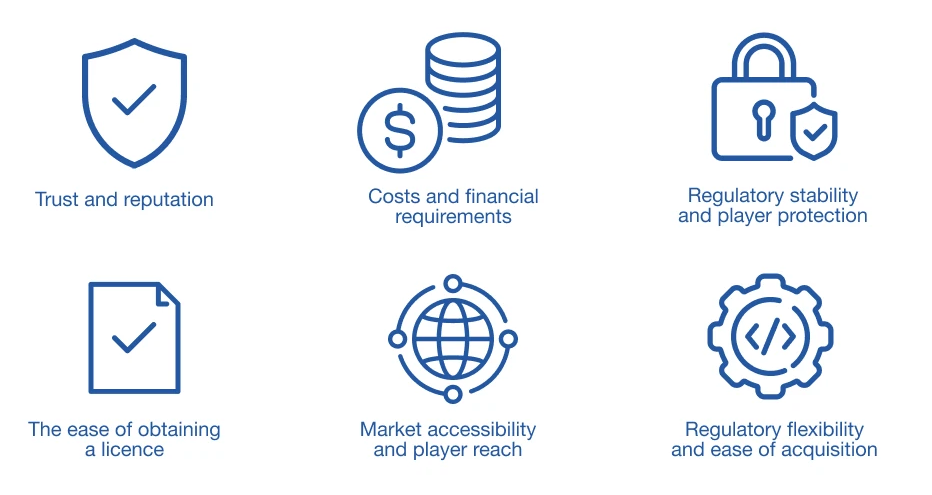
The popularity and strategic choice of certain casino licenses over others generally depend on several key factors that influence an operator’s decision-making process.
One of the most important considerations is trust and reputation. Licenses from respected jurisdictions such as Malta and the UK are highly sought after because they command strong credibility in the industry. These licenses signal to both players and partners that the casino operates under strict regulations, ensuring fair play, financial transparency, and robust player protection measures. As a result, operators holding such licenses are more likely to attract a loyal player base and secure partnerships with leading payment providers and software developers.
Costs and financial requirements also play a major role in the appeal of a casino license. Jurisdictions that provide a favorable balance between licensing fees, taxes, and market access tend to attract more operators. For example, despite its higher upfront costs, the Gibraltar Regulatory Authority is popular among established operators thanks to its favorable tax regime. Meanwhile, lower-cost licenses such as those from Curaçao appeal to smaller operators and start-ups aiming to minimize initial expenses. The financial requirements—such as capital reserves and ongoing fees—are critical factors operators must weigh against the potential benefits of entering a specific market.
Regulatory stability and player protection are equally important when it comes to choosing a license. Jurisdictions with stable regulatory frameworks and a strong emphasis on player safety, such as Sweden’s Spelinspektionen, are often preferred by operators who value long-term stability and player trust. These jurisdictions stand out for their established legal frameworks and proactive approach to regulation, ensuring that operators uphold high standards and adapt to new challenges without facing sudden or unpredictable changes.
The ease of obtaining a license is another important factor. Jurisdictions with straightforward application processes and reasonable requirements, such as the Isle of Man, tend to see higher adoption. Complex procedures and excessive documentation requirements often discourage operators. Licenses that streamline the process, minimize bureaucratic hurdles, and provide clear guidelines are naturally more attractive—especially for operators looking to enter the market quickly.
Market accessibility and player reach are also key considerations for operators aiming to expand and maximize their audience. Licenses such as the Malta Gaming Authority (MGA) are popular because they allow operations across multiple European countries. This broad access not only increases player reach but also strengthens an operator’s ability to diversify its market base, which, in turn, reduces reliance on any single jurisdiction. The ability to tap into diverse markets with a single license is often a decisive advantage.
Finally, regulatory flexibility and ease of acquisition can significantly influence a license’s popularity. Licenses from Curaçao, for example, are easier to obtain, with a more lenient application process and lower costs. This makes them ideal for new entrants or operators that prefer a lighter regulatory framework. Flexibility enables operators to adjust strategies and operations with minimal regulatory interference, ultimately making these licenses especially appealing to those looking to experiment or quickly adapt to changing market conditions.
Key takeaways
- Trust and Reputation: Jurisdictions with strong reputations attract more players and partners.
- Financial Requirements: A favorable balance between market access and cost is crucial.
- Stability and Player Protection: Operators prefer stable regulations and strong player safeguards.
- Ease of Obtaining a License: Straightforward licensing processes lead to higher adoption.
- Access and Player Reach: Some licenses allow entry into multiple markets.
- Ease of Acquisition: Certain licenses are easier and less costly to obtain.
Which licenses offer the best value for money?
There are multiple costs associated with obtaining and maintaining an official gaming license, which include:
- Application Fees
- License Fees
- Tax Obligations
- Ongoing Compliance Costs
- Compliance Audits: Regular compliance audits are typically required annually and can vary in cost depending on the jurisdiction.
- Annual Operational Costs: Includes anti-money laundering (AML) compliance costs, responsible gaming measures, and continuous regulatory reporting.
- Renewal Fees: Some jurisdictions, such as the MGA and UKGC, require renewal fees similar to the initial license fees, which must be paid on a regular basis (for example, every five years).
These costs can vary depending on the size and scope of the operator’s business, the jurisdiction chosen, and the specific regulatory requirements.
When evaluating which casino licenses provide the best value for money, online casino operators must carefully weigh the costs associated with each option. The Curaçao Gaming Control Board license is among the most affordable, with low application fees and minimal annual expenses—making it ideal for start-ups or smaller operators focused on cost-effective market entry.
By contrast, the Malta Gaming Authority (MGA) license, though more expensive due to higher application fees and a progressive tax system, delivers significant financial advantages for operators with higher revenues, thanks to access to multiple European markets. Similarly, the Gibraltar Regulatory Authority offers low tax rates but comes with higher upfront licensing costs, making it a strong choice for established operators looking to minimize taxes while maintaining a solid regulatory reputation.
Ultimately, each license offers unique financial benefits depending on the operator’s revenue goals and market strategy, ensuring that options exist for both emerging and established online casinos.
Top Three Value-for-Money Casino Licenses:
- Curaçao Gaming Control Board:
Known for low application fees and minimal annual costs, this license is ideal for operators seeking fast market entry with minimal financial outlay. - Malta Gaming Authority (MGA):
Provides access to multiple European markets and uses a progressive tax system, making it cost-effective for high-revenue operators seeking broad market reach. - Gibraltar Regulatory Authority:
Offers a low-tax environment with a strong regulatory reputation, appealing to established operators aiming to reduce tax liabilities while maintaining credibility.
Strategic recommendations
To align licensing strategy with business goals, operators should carefully assess their target markets, operational scale, and revenue aspirations. Choosing a licence that offers access to key markets while balancing costs and regulatory requirements is the optimal approach for many. For a broader reach, on the other hand, licences like those from Malta or the UK provide substantial credibility and market access. However, a Curacao licence might be more practical for cost-sensitive operators while operators are finding their feet and becoming established.
In all situations, aligning a licensing strategy with business objectives requires a nuanced approach considering market entry speed, compliance capabilities, and long-term growth ambitions.
Emerging trends in iGaming regulation
The evolution of gambling regulations and frameworks has the potential to reshape the appeal of certain casino licenses, particularly as stricter compliance requirements and stronger player protection measures are implemented. Emerging markets are also expected to adapt and align their regulations, creating both new opportunities and additional restrictions for operators. Technological advancements such as blockchain and AI are also set to influence licensing preferences by enabling more secure and transparent operations.
In this evolving environment, tools like the Agreegain gaming aggregator become increasingly valuable, giving operators streamlined access to large and diverse game libraries while maintaining compliance across multiple jurisdictions. Moreover, the adaptability of forward-thinking software like this can strongly influence an operator’s licensing choice by aligning with regulatory trends and technological innovation.
Popular blog posts