
Starting an online casino in 7 steps: Everything you need to know

Updated 8 Jan 2026•Published 8 Jan 2026
Overview
The online gambling industry is experiencing unprecedented growth across multiple markets worldwide, making it an increasingly attractive business venture. Projections estimate that the global online gambling market could surpass $153.57 billion by 2030, growing at a compound annual growth rate of about 11.9%.
Fueled by major technological advancements, rising smartphone use, and evolving regulations in many jurisdictions, online casinos present a lucrative opportunity. However, launching a successful online casino is not without its challenges.
Obtaining the necessary licenses, choosing the right software provider, and implementing an effective marketing strategy are just a few of the critical factors that influence a platform’s success. Platform operators must also ensure airtight compliance with strict legal requirements and prioritize security to build and maintain player trust.
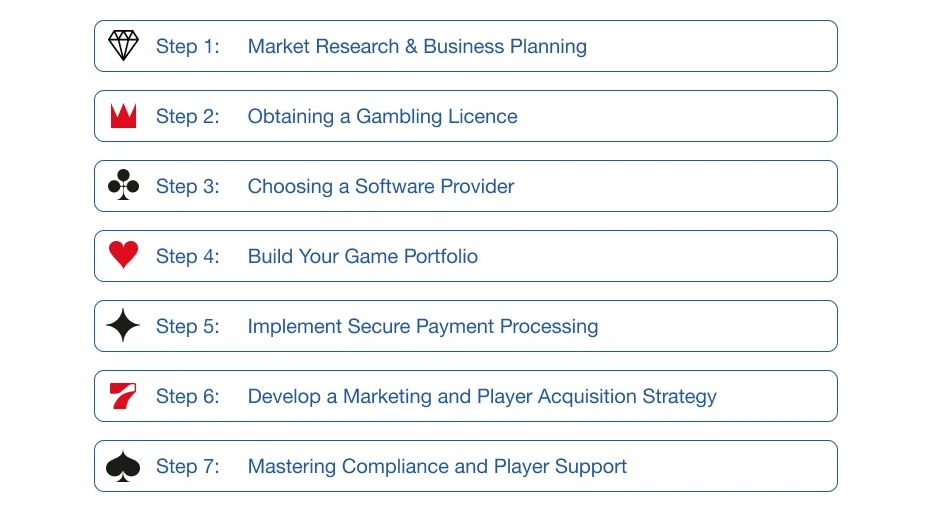
This guide provides a clear, step-by-step approach to help aspiring operators navigate the complexities of establishing a profitable online casino business. We’ll share key industry insights and show you exactly how to launch your online casino in seven straightforward steps.
Step 1: Market research & business planning
The timeless saying “if you fail to plan, you plan to fail” applies just as much in the iGaming industry as anywhere else. That’s why conducting thorough market research and developing a well-structured business plan are essential first steps toward success.
This initial stage of launching an online casino can be broken down into three main areas:
- Identifying a target audience
- Defining a sustainable business model
- Establishing clear financial projections
This level of detailed planning early on lays the foundation for a profitable and legally compliant platform from the start.
Analyze the target market
The first step in launching any successful online casino is defining a market to target. This leads to a more focused approach and avoids a scattershot strategy. The global online gambling market is growing rapidly and is expected to exceed $153.57 billion by 2030.
However, this growth isn’t evenly distributed across all markets, so it’s important to consider the following factors before selecting a target market:
- Regions and Territories: Established markets like the UK and Sweden have mature player bases and well-defined regulations, while emerging markets in Latin America, Africa, and parts of Asia offer high-growth potential but also higher risks.
- Audience: Clearly defining the ideal customer profile helps shape future game offerings, promotional strategies, and payment options.
- Competition: Analyzing competitors—their game portfolios, promotions, and user experience—helps differentiate a new platform and highlight gaps in the market.
Define the business model
Choosing the right business model is critical to the long-term success of any online casino. The three main models are:
- Business-to-Consumer Online Casino: The operator runs their own branded platform, handling customer acquisition, marketing, and operations. This model requires a significant upfront investment but offers full control over revenue and branding.
- White-Label Solution: A pre-built casino platform from a third-party provider, such as Agreegain. This model allows operators to launch quickly with minimal setup or major financial investment. White-label solutions reduce technical complexity but typically involve revenue-sharing agreements with the provider.
- Affiliate-Based Online Casino: Instead of running a full casino, businesses promote existing platforms through affiliate marketing. This requires less upfront investment but depends heavily on contracts, content creation, SEO, and marketing expertise.
Key financial considerations
Setting realistic financial expectations and accounting for all startup costs are crucial to launching and sustaining an online casino. Thorough research and careful planning help position startups for long-term success.
Operators should budget for the following:
- Setup Costs: Licensing fees, software contracts, game development, website design, and marketing can add up to more than $500,000 depending on the jurisdiction and size of the operation.
- Expected ROI: While returns vary, successful operators often achieve profit margins of 20–30% once a steady player base is established. This should be calculated after factoring in all costs to create a realistic projection.
- Funding Options: Self-funding, venture capital, or partnerships with gaming software providers can help offset steep startup expenses and ease the path forward.
Step 2: Obtaining a gambling license
One of the most critical steps in launching an online casino is obtaining a valid gambling license. It’s not only a legal requirement to operate under a recognized regulatory body but also essential for building credibility and trust with players, financial institutions, and software partners.
A legitimate gambling license allows operators to legally offer casino games and other gambling services while complying with responsible gaming standards. Licensed operators benefit from:
- Legitimacy and Trust: Players feel more confident using licensed casinos, knowing they’re protected by legal frameworks.
- Payment and Banking Access: Banks and payment providers generally require a valid license to process transactions.
- Software Partnerships: Game developers and platform providers prefer working with fully licensed operators.
- Regulatory Compliance: A license ensures adherence to local laws, helping avoid disputes and fines.
Key licensing jurisdictions
The choice of jurisdiction for licensing depends on the platform’s target market, budget, and regulatory requirements. Some of the most common and reputable licensing authorities in the online casino industry include:
1. Malta Gaming Authority (MGA)
- One of the most respected regulatory bodies in the iGaming industry.
- Known for strict player protection measures and strong compliance regulations.
- Its licenses are recognized by major financial institutions and game providers alike.
- Best suited for operators targeting European online casino markets.
2. UK Gambling Commission (UKGC)
- Highly regarded across the industry for its strict compliance and player safety.
- Requires robust anti-money laundering and responsible gaming protocols.
- An essential license for operators looking to access the UK market.
- Strongly focused on fair play, financial stability, and data security.
3. Curaçao eGaming
- Generally the most cost-effective and widely accessible licensing option.
- Offers more flexible regulations, making it attractive for new online casino operators.
- Allows operators to serve multiple international markets with a single license.
- Slightly less stringent compliance requirements compared to MGA or UKGC.
4. Gibraltar Regulatory Authority
- Well-respected in both the European and global iGaming industry.
- Provides tax advantages and a business-friendly regulatory environment.
- Requires high compliance standards but offers long-term stability for operators.
- Best suited for established online casinos looking to expand internationally.
Legal requirements: KYC & AML policies
To comply with local gaming regulations, licensed casinos must implement Know Your Customer (KYC) and Anti-Money Laundering (AML) procedures. These measures help prevent fraud, money laundering, and underage gambling, ensuring a safe and responsible gaming environment for players.
Know your customer (KYC)
- Operators must verify player identities before allowing withdrawals.
- Players are required to provide documents such as passports, driver’s licenses, and utility bills to confirm their identity and physical address.
- KYC helps prevent identity theft and underage gambling.
Anti-money laundering (AML) compliance
- Casinos must monitor financial transactions to detect and act on suspicious activities.
- Operators are required to report high-value transactions to the appropriate authorities.
- These measures ensure that illicit funds aren’t funneled through online gambling platforms.
Step 3: Choosing a software provider
Selecting the right casino software provider is one of the most important decisions when launching an online gambling platform. Using high-quality software ensures a seamless user experience along with robust security.
The right provider also enables smooth integration of core online casino features such as games, payment processing, and player management systems. This directly impacts player retention and overall platform success.
Understanding software solutions: turnkey vs. white label
Operators typically choose between two common options for software solutions: turnkey or white-label platforms. Here are the key differences:
- Turnkey Solutions: A complete, ready-made system that gives full ownership and operational control. Operators can customize branding, select game offerings, and implement unique marketing strategies. This approach requires a larger upfront investment but provides greater flexibility and scalability in the long run.
- White-Label Solutions: A pre-built platform that lets operators launch under an established provider’s license and infrastructure. This model speeds up time to market and reduces regulatory burdens, but usually includes revenue-sharing agreements and limited customization options.
Custom-built vs. pre-made software
Beyond turnkey and white-label solutions, operators can also decide between:
- Custom-Built Platforms: Offer complete control over the casino’s design, features, and user experience. However, they require significant time, financial investment, and technical expertise.
- Pre-Made Software: Enables faster launches by using frameworks built by leading providers. While customization is limited, this option ensures stability and compliance with industry standards.
User experience and mobile optimization
A successful online casino must deliver an excellent user experience, making it as easy as possible for players to load games and start playing. Partnering with a top-tier software provider helps ensure this.
Mobile compatibility across all devices is an essential consideration when selecting a provider. As mobile gaming continues to grow, players expect seamless access across screens of all sizes. Fast loading times are also key to minimizing disruptions and retaining players who won’t tolerate laggy sites.
Step 4: Build your game portfolio
Building a well-rounded game library is essential for attracting and retaining players in an increasingly competitive market. Offering a wide variety of high-quality, popular titles broadens the appeal of any online casino. Focus on the following two areas to develop a strong portfolio:
Decide on game types
Including a balanced mix of game types that appeal to different player preferences is critical when building a game library. The most popular categories include:
- Slot Games: Video slots are the backbone of online casinos. They feature diverse themes, bonus features, and progressive jackpots.
- Video Table Games: Virtual versions of classic table games like blackjack, roulette, and poker.
- Live Dealer Games: Live-streamed games with real dealers recreate the atmosphere of a land-based casino. Options range from traditional table games to interactive, game-show-style experiences.
- Sports Betting: Adding a sportsbook allows players to wager on sports events, both pre-game and live, expanding a casino’s appeal.
Partner with game providers for a diverse selection
Partnering with the right game providers ensures quality, variety, and reliability. Working with multiple providers helps offer a broader selection of games and keeps content fresh with the latest releases.
Some leading online casino game providers include:
- Evolution Gaming: A leader in live dealer games, known for immersive experiences and innovative streaming technology.
- Pragmatic Play: Specializes in a wide variety of slots and live casino games with a strong focus on player engagement.
- Hacksaw Gaming: Offers creative instant-win games, scratch cards, and slots, recognized for distinctive style and design.
Step 5: Implement secure payment processing
The next step in launching an online casino is ensuring secure and seamless payment processing. Players expect smooth deposits and withdrawals, so providing multiple trusted payment methods while maintaining top-tier security is essential.
Offering a strong mix of payment options
To appeal to a wide audience, it’s best to support a diverse range of payment methods. Since different markets have different preferences, a one-size-fits-all approach rarely works.
Key payment methods include:
- Credit/Debit Cards: Visa and Mastercard remain the most widely used deposit options. They’re trusted for convenience and familiarity.
- E-Wallets: Services like PayPal, Skrill, and Neteller enable fast, secure transactions. Popular with players who prefer digital and mobile banking solutions.
- Cryptocurrencies: Bitcoin, Ethereum, and other digital currencies are gaining popularity thanks to anonymity, speed, and low fees. While not accepted everywhere, crypto can provide a competitive edge.
- Bank Transfers/Regional Alternatives: Some players prefer direct bank transfers. Regional options like PaySafeCard, Trustly, or Sofort also provide flexible alternatives for casino payments.
The importance of fraud prevention and payment security
Security is paramount in the online gambling industry. Players must have complete confidence that their financial data is protected at all times.
Creating a trustworthy environment where players feel safe depositing and withdrawing funds enhances player retention and long-term business success.
To establish credibility and trust, operators must implement strong security measures that protect both the platform and its users from fraud, data breaches, and other active cyber threats.
- SSL Encryption and PCI Compliance: End-to-end encryption protects all financial transactions against cyber threats. Compliance with the Payment Card Industry Data Security Standard (PCI DSS) is essential for securely handling card payments.
- Anti-Fraud Systems: AI-driven fraud detection tools help identify suspicious activity, preventing chargeback fraud and money laundering attempts.
- Two-Factor Authentication (2FA): Requiring an extra layer of authentication for withdrawals and logins protects players from unauthorized account access.
- KYC and AML Policies: Strict KYC verification confirms players are who they claim to be, reducing fraud and illegal activity. Regular AML checks detect and report suspicious transactions in compliance with regulatory requirements.
Step 6: Develop a marketing and player acquisition strategy
Players are the lifeblood of any online casino, and a platform’s success depends on attracting, engaging, and retaining them. A well-structured marketing and player acquisition strategy is critical to achieving this.
From SEO to promotional campaigns, there are numerous tactics that can be strategically implemented to maximize visibility and engagement for a new platform. This section highlights strategies to attract and retain active online casino players.
Leverage SEO content for organic traffic
Search engine optimization (SEO) is an effective long-term strategy for driving organic traffic to an online casino. Using relevant keywords and producing high-value content that users are searching for improves a site’s ranking in search results.
Here are three main methods platforms use to leverage content for organic (non-paid) web traffic:
- Keyword Optimization: Use targeted search terms like “best online casino” or “real money slots” across the site to boost rankings.
- SEO Content Marketing: Create informative blog posts, game guides, and industry news to engage users and establish credibility.
- On-Page and Off-Page SEO: Ensure fast-loading pages, mobile responsiveness, and quality inbound links from reputable, authoritative sites.
Utilize affiliate marketing and strategic partnerships
Affiliate marketing is a popular and cost-effective way to expand reach and attract high-intent players. Partnering with reputable affiliates allows operators to tap into established audiences actively seeking new platforms.
- Affiliate Networks: Join platforms that connect with experienced casino affiliates to expand reach quickly.
- Commission-Based Incentives: Revenue-sharing or CPA (cost-per-acquisition) models motivate affiliates to promote a site.
- Brand Partnerships: Collaborate with industry leaders and gaming streamers to boost brand awareness among engaged audiences.
Deploy bonus and promotion strategies
Casino bonuses and promotions are among the most effective methods for player acquisition and retention. Competitive rewards encourage sign-ups and continued play.
Common bonus types include:
- Welcome Bonuses: First-time deposit bonuses and free spins attract new players and reward them for joining.
- Loyalty Programs: VIP perks, cashback, and exclusive promotions provide ongoing rewards to loyal players. Multi-tiered programs with increasing benefits often mirror player commitment.
- Seasonal Promotions: Holiday-themed offers, tournaments, and limited-time bonuses keep players engaged and make a casino feel current.
Engage in social media marketing
Social media platforms provide direct engagement with potential players while boosting brand visibility. A strong presence on Facebook, Instagram, X, or YouTube can generate buzz around a new casino brand.
Here’s why social media marketing is valuable:
- Building Community: A loyal following can be created through engaging posts, giveaways, and direct interaction with followers.
- Influencer Collaborations: Working with gaming influencers and casino streamers is an effective way to showcase a platform to a ready-made audience.
- Paid Advertising: Targeted ads on social media drive traffic and conversions from users already searching for casino content.
Step 7: Mastering compliance and player support
The final step to running a successful online casino is staying compliant with industry regulations and delivering exceptional customer support. Strict adherence to legal requirements builds trust and supports long-term success.
Focusing on compliance, player protection, and responsible gambling creates a safe and engaging environment for users. Strong player care can even serve as a competitive advantage in the crowded iGaming industry.
Regulatory compliance: A non-negotiable requirement
Online gambling is one of the most heavily regulated industries worldwide. Failing to meet legal obligations can result in severe consequences, including fines, license revocation, and reputational damage.
To remain compliant, operators must stay up to date with regulations in their licensing jurisdictions. Key measures include (as detailed in Step 2):
- Know Your Customer (KYC) Protocols: Verifying player identities to prevent fraud and underage gambling.
- Anti-Money Laundering (AML) Policies: Ensuring secure financial transactions and preventing illicit activity.
- Fair Play & Responsible Gaming Practices: Using certified random number generators (RNGs) and offering self-exclusion tools to protect vulnerable players.
- Data Protection & Security: Employing encryption technologies to safeguard player information and payment details.
Offering stellar 24/7 player support
Making players feel supported and valued encourages loyalty and repeat engagement, both of which are vital to building a thriving online casino. High-quality support plays a key role in achieving this.
Providing around-the-clock assistance through multiple support channels ensures players receive timely help:
- Live Chat: The most popular option, giving players instant access to a human support agent.
- AI-Powered Chatbots: Useful outside business hours for directing players to help articles or FAQs.
- Email Support: Best for non-urgent or complex issues.
- Phone Support: Offers reassurance but can be expensive with high call volumes.
- FAQ and Help Center: A comprehensive, wiki-style knowledge base reduces unnecessary player contacts by answering common questions upfront.
In summary: Your roadmap to online casino success
Launching a successful online casino requires careful planning and execution, following the seven critical steps outlined above. From securing the proper licenses to selecting reliable software providers and payment solutions, every detail matters.
Alongside the technical setup, it’s just as important to implement strong marketing and retention strategies to build a loyal player base. While the planning and launch process may seem complex, rapid growth and success are achievable with a clear business strategy and a sharp focus on user experience.
At Agreegain, we specialize in guiding online casino operators through every step of the journey. Our experts ensure full compliance from day one, helping you establish a strong foundation for long-term success.