

Beyond FTDs: Using smarter metrics for streamer and influencer affiliate ROI

Updated 18 Feb 2026•Published 18 Feb 2026
Overview
In the rapidly evolving world of online casino marketing, streamers and influencers have emerged as powerful affiliate partners. Their ability to build trust with loyal communities, generate buzz, and drive sign-ups has made them attractive assets for casino brands seeking visibility and growth.
But as more operators lean into influencer-led acquisition, over-reliance on FTD (First-Time Deposit) volume as the primary measure of ROI can be a poor choice.
In this article, we explore why FTD volume fails to capture the full value of influencer and streamer campaigns. We’ll break down where FTD metrics fall short and which alternative KPIs provide a clearer picture of long-term return on investment.
What FTD volume measures and why it’s misleading
FTD volume simply counts the number of players who register and make a first deposit. This makes it easy to track, and it typically looks good in your reporting. For these reasons, it’s long been the standard in affiliate marketing.
But in the context of influencer and streamer affiliates, FTD volume can be misleading. It shows quantity, but not quality. You might get 100 new players today, but:
- How many will deposit again?
- How long will they stay?
- Will they generate real revenue?
If most of those players churn after one session or are only there for a bonus, your campaign hasn’t truly delivered value, no matter how high the FTD count is.
Example: Volume vs value
As a real-world example, let’s compare two hypothetical influencer campaigns:
| Metric | Campaign A | Campaign B |
|---|---|---|
| FTDs | 120 | 40 |
| Retention over 30 days | 10% | 65% |
| Average revenue per player | £8 | £90 |
| Total revenue | £960 | £3,600 |
As the comparison shows, more FTDs don’t always equate to more value generated. Campaign A delivers triple the sign-ups, but Campaign B generates nearly four times the revenue, thanks to higher retention and better-quality traffic.
This example highlights why it’s critical to look beyond vanity metrics such as FTD volume and start evaluating influencer campaigns based on the metrics that matter. Look towards player value, engagement, and long-term contribution to your bottom line for a better way to evaluate ROI from your streamer and influencer affiliates.
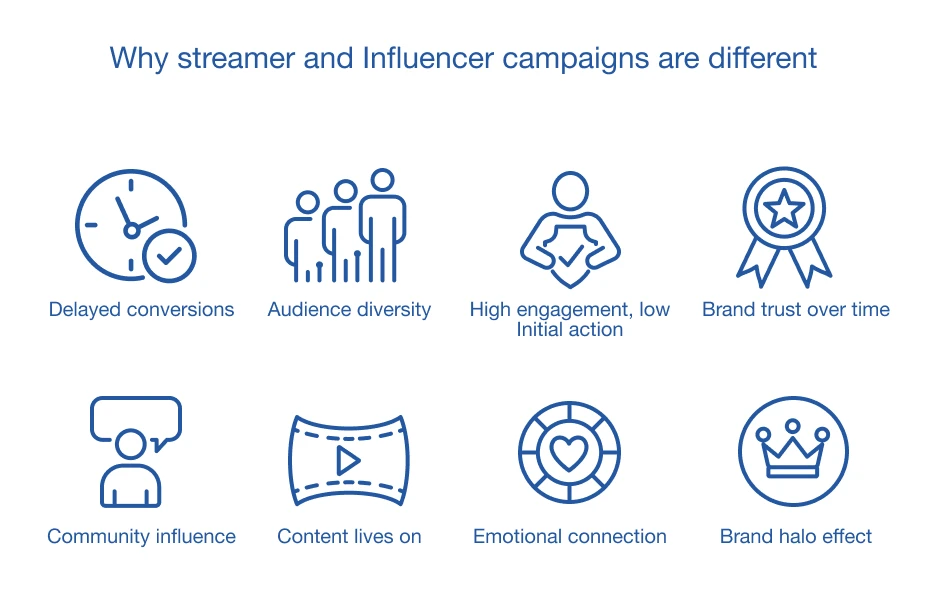
Why streamer and influencer campaigns are different
Streamer and influencer affiliates work differently from SEO, paid search, or traditional affiliate channels. They’re community builders, entertainers, and trust brokers as well as high-value traffic drivers. Here's why FTD volume alone doesn’t reflect their true impact:
- Delayed conversions:
Many players don’t sign up immediately. They might watch several streams, get familiar with the brand, and only convert days or even weeks later, often outside the standard FTD attribution window. - Audience diversity:
Streamers and influencers attract a wide mix of followers; some are there for entertainment, others for giveaways, and only a fraction are active gamblers. FTD metrics don’t reflect the different levels of interest or intent. - High engagement, low initial action:
Viewers might engage heavily (chatting, following, clicking through), even if they don’t deposit right away. FTD volume doesn’t capture this valuable brand interaction. - Brand trust over time:
Influencer partnerships build long-term trust. Viewers often convert when they see repeated endorsements over time, making single-campaign FTD snapshots incomplete. - Community influence:
A single streamer might influence multiple players within a tight-knit community. One person deposits now, another in a week, another after payday and yet only one is counted in FTD volume. - Content lives on:
Influencer content on platforms like YouTube or Twitch can continue generating traffic and sign-ups long after the initial campaign. FTD tracking typically misses this "long tail" of conversion. - Emotional connection:
Influencers often have a strong rapport with their audience. When they recommend a casino, it can carry more weight than a Google ad, but the decision to act is emotional, not instant. - Brand halo effect:
Even if viewers don’t sign up, they now recognise your brand. That familiarity may influence later decisions, even if the deposit happens via a different channel.
The risk of focusing only on FTDs
When you reward affiliates, especially streamers and influencers, purely based on FTD volume, you may unintentionally encourage behaviours that can hurt long-term ROI.
Here’s how:
- Low-value sign-ups:
Affiliates may target bonus hunters or free-play seekers who deposit once, claim a welcome offer, and never return, delivering high FTDs but low revenue. - Short-term traffic spikes:
Influencers may push aggressive calls to action for instant sign-ups, creating temporary traffic bursts with very little retention or engagement after day one. - Incentive misalignment:
Affiliates are rewarded for volume, not quality. This can result in tactics that prioritise sign-up numbers over long-term player value or compliance. - Overpayment for underperformance:
Operators end up paying premium rates for campaigns that don’t deliver sustainable revenue, eating into marketing budgets without real returns. - Data blind spots:
Focusing on FTDs can mask more important trends like churn rate, session activity, or average deposit size, making it harder to identify high-performing partners. - Wasted spend:
Campaigns that look successful on paper (high FTD count) may be dragging down ROI once player quality and retention are taken into account. - Missed opportunities:
By ignoring deeper metrics, you may overlook smaller campaigns that drive fewer but more profitable players, missing out on better-performing affiliate relationships.
What you should measure instead of FTD volume
To accurately assess the ROI from influencer and streamer partnerships, it’s essential to move beyond FTD volume. Instead, focus on the following metrics that will offer you some deeper insights into long-term player value and campaign effectiveness.
| Metric | What it measures | Why it matters |
|---|---|---|
| Net gaming revenue (NGR) | The actual revenue generated by referred players, minus any bonuses and costs. | Shows the real financial return from the affiliate’s traffic, not just raw deposit figures. |
| Player lifetime value (LTV) | Total revenue a player generates over their full lifecycle. | Helps identify whether affiliates are sending high-quality, long-term players. |
| Retention rates | Percentage of players still active after a set time, such as 7, 30, or 90 days. | Indicates player stickiness and satisfaction, essential for sustainable growth. |
| Cost per active player | The actual marketing spend, divided by the number of engaged, depositing users. | A more accurate reflection of acquisition efficiency than cost per FTD. |
| Engagement metrics | Session length, login frequency, total bets placed, and more. | Reveals how deeply players interact with your platform, key for long-term revenue potential. |
| Brand reach or lift | Changes in brand awareness, direct traffic, or search volume post-campaign. | Measures brand visibility impact, even if conversions are delayed or indirect. |
How to align your affiliate strategy for better ROI
Shifting away from FTD-focused measurement is only part of the solution. To truly maximise the value of influencer and streamer partnerships, operators should also adjust their affiliate strategy to reward quality over quantity.
Here’s how to best achieve this:
- Use hybrid or revenue share models:
Instead of flat CPA deals based on FTDs, offer hybrid models that combine a modest upfront payment with performance-based rewards. This encourages affiliates to think beyond the first deposit and focus on long-term engagement. - Set quality-based KPIs:
Build campaigns around targets like player retention, NGR, or LTV rather than pure sign-up volume. Let your affiliates know what success should look like and tie their commission to sustainable outcomes. - Offer tiered rewards:
Create incentives that increase as player value improves. For example, offer bonuses for hitting milestones like 30-day retention or specific revenue thresholds. - Use post-campaign analysis:
Don’t just report on FTDs. Review detailed user behaviour, compare player quality across partners, and refine future deals based on performance data, not assumptions. - Educate your affiliates:
Share insights with influencer partners about your ideal player profile. The more they understand your goals, the more likely they are to adapt their messaging and deliver better results. - Leverage multi-touch attribution:
Where possible, implement tracking tools that credit influencers for conversions that happen days or weeks later. This ensures their full contribution is recognised, even if the FTD doesn’t occur immediately.
Final thoughts: Focus on value, not just volume
Streamer and influencer affiliates offer trust, reach, and a meaningful connection with audiences. But if your affiliate model rewards only FTD volume, you risk overpaying for surface-level metrics while undervaluing the true impact these partners can deliver.
FTD volume might show you who walked through the doors of your online casino, but smarter metrics, like NGR, LTV, and retention, show who stayed, played, and became profitable. These are the insights that matter when evaluating ROI, allocating budgets, and building long-term partnerships.
By aligning your strategy with quality-focused KPIs and rewarding performance over raw numbers, you can unlock the full potential of influencer and streamer affiliates and drive growth that lasts beyond the first deposit.
Popular blog posts