

Navigating casino finances: How GGR and NGR impact strategy and growth

Updated 2 Mar 2026•Published 2 Mar 2026
Overview
Revenue measurement is critical in any industry, and that’s certainly the case when it comes to the online casino sector. Two key metrics are commonly used for high-level financial analysis: Gross Gaming Revenue (GGR) and Net Gaming Revenue (NGR).
Both metrics relate to an online casino’s revenue, each providing different insights into a platform’s financial health, profitability, and overall market position. For casino operators, investors, and regulators, understanding the distinction between GGR and NGR is essential for informed decision-making.
This article breaks down what these metrics mean, how they are calculated, and why they matter when it comes to shaping business strategy and long-term success.
GGR and NGR: The key financial indicators explained
Before we dive into the differences and implications of GGR and NGR, it’s important to define what these terms mean and how they are both calculated. Below is a brief overview of these two key financial indicators and their role in assessing a casino’s current financial performance.
The definition and calculation of GGR
Gross Gaming Revenue (GGR) is the total amount wagered by players, minus the total winnings paid out. This simple calculation gives platform operators a broad measure of a casino’s total revenue before any costs are subtracted.
Written as a formula: GGR = Total Bets - Total Winnings
A real-world example:
Players wager a total of £10 million
Their total winnings = £7 million
GGR = £3 million
GGR is often used as a headline figure to provide a broad snapshot of an online casino's revenue before accounting for operating costs. While it indicates the overall scale and profitability of the business, it does not reflect net earnings or longer-term financial sustainability.
The definition and calculation of NGR
Net Gaming Revenue (NGR) takes the GGR figure but deducts additional business expenses such as taxes, bonuses, and affiliate commissions. This indicates the actual revenue retained by an online casino after operating costs.
Written as a formula: NGR = GGR - (Bonuses + Taxes + Affiliate Commissions + Other Costs)
A real-world example:
GGR = £3 million
(Minus Taxes of £500,000)
(Minus Bonuses of £300,000)
(Minus Affiliates of £200,000)
NGR = £2 million
NGR offers a more detailed and accurate measure of a casino’s profitability and long-term viability by accounting for its expenses and operating costs.
Key differences between GGR and NGR
As we have seen, GGR and NGR measure revenue in different ways. It’s important for operators to understand their roles in an online casino's financial analysis. The table below shows the key differences between these two key forms of revenue measurement.
| Factor | GGR | NGR |
|---|---|---|
| Definition | The total bets placed minus total winnings paid out to casino users. | GGR minus expenses such as bonuses, commissions, and local taxes. |
| Purpose | Measures a casino’s market size and performance. | Indicates a casino’s profitability and sustainability. |
| Important for | Governments for taxation purposes in regulated markets. | Platforms for internal financial planning and budgeting. |
| Financial insight | Shows the gross earning potential before expenses. | Reflects true earnings after all costs are deducted. |
| Industry use | Used by regulators, investors, and analysts to compare casinos and industry trends. | Used by operators for financial planning, budgeting, and ROI evaluations. |
| Competitor analysis | Useful for comparing casinos within the market. | More relevant for internal business strategy and decision-making. |
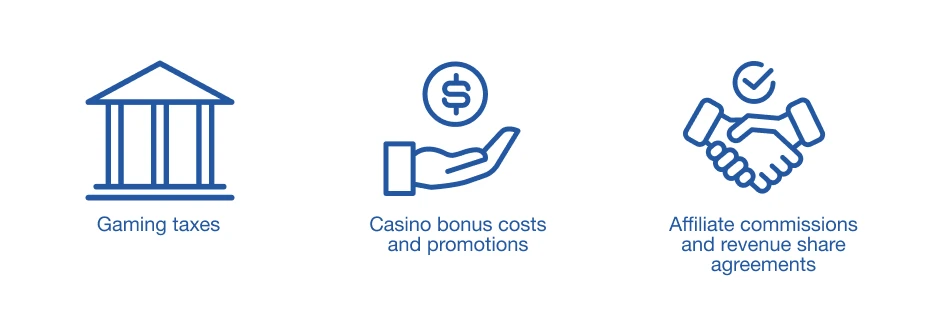
How taxes, bonuses, and affiliates can impact NGR
Several key factors contribute to reducing the final NGR figure from the initial GGR calculation. These can highlight which areas operators should focus on and manage to improve their overall revenue.
Gaming taxes
Gambling taxes will be calculated and deducted from a platform’s GGR in most regulated online casino markets around the world. The rate of tax depends on the local jurisdiction and can vary greatly. This tax rate will have a significant impact on the final NGR figure.
As an operator, a pragmatic approach to gaming taxes should include:
- Seeking out markets with lower taxation rates for gaming platforms.
- Factoring in the costs of taxation obligations before structuring their offerings.
Casino bonus costs and promotions
Bonuses and promotions are used to attract new players and retain existing ones but always have a cost associated with them. Offering free spins, cashback, deposit bonuses and other promotions will have a direct reduction to a casino’s final NGR figure.
To help minimise this cost, casino operators can look to:
- Manage bonus strategies as effectively as possible.
- Set wagering requirements on any bonuses offered.
Affiliate commissions and revenue share agreements
Affiliate programs can be a highly effective way to bring new users to an online casino platform but they come at a cost. Revenue share models, commonly used by affiliates, typically take between 20% and 50% of NGR.
To help minimise the costs associated with affiliate programs, operators can look to:
- Seek out revenue share models closer to the lower end of the scale.
- Carefully balance acquisition costs with long-term player value.
- Use analytics data to ensure that any program is giving maximum value.
Why GGR and NGR matter
Both GGR and NGR are key metrics that indicate the current financial health of a casino platform. They can influence and shape strategic opportunities and investment opportunities for both operators and investors.
GGR for investors: Giving confidence and valuation
Current or future investors can use GGR to confidently gauge a platform’s market potential and performance. They will seek a high GGR to indicate strong player engagement and market share.
GGR is typically used in:
- Financial reporting and investor-focused presentations.
- Securing funding to enable business expansion.
NGR for operations: Strategy planning and profitability
Operators view NGR as a true indicator of the success or shortfalls of their business. It’s a vital factor in helping to manage costs effectively and therefore ensure higher profits and continued growth.
NGR is typically used in:
- Operator budgeting and profit forecasting.
- Optimising marketing spending and planning bonus strategies.
Conclusion: Balancing GGR and NGR for long-term success
As we have seen, GGR provides a broad measure of a platform’s performance, while NGR is the key metric used to determine true profitability. To help ensure their long-term success, casino operators should look to use a balance of insights from both indicators.
This can help to place a focus on optimising costs, effectively managing taxation, and balancing player incentive spending. Operators and investors can then make informed decisions to help drive revenue growth and maintain a competitive edge in a highly competitive industry.
If you are looking to get the right balance of financial analysis and planning, Agreegain can help.
Popular blog posts